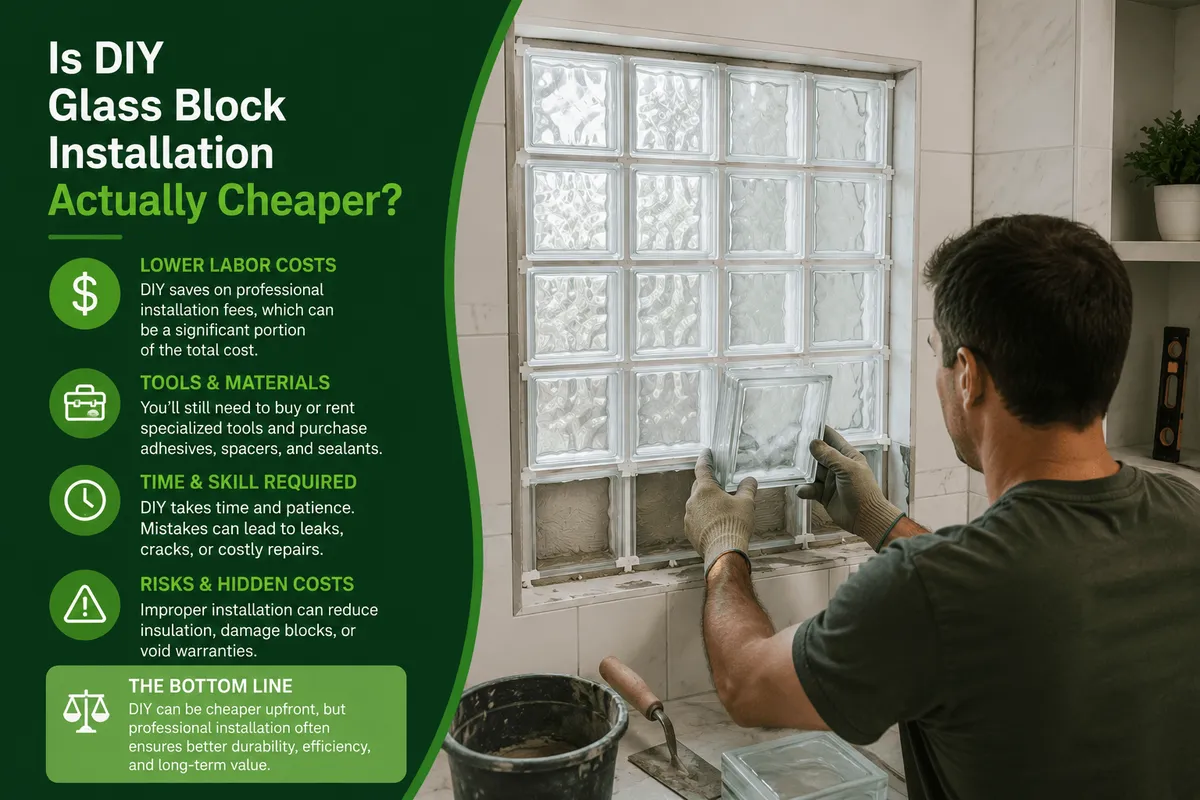
Is DIY Glass Block Installation Actually Cheaper?
If you have priced glass block window materials at a home improvement store or looked them up online, you might be wondering whether you can skip the installation cost and handle the project yourself. It is a reasonable question -- especially if you are a handy homeowner who has tackled other projects with good results. The math, however, does not always work out the way it looks on the surface. The true cost of DIY goes well beyond the price of the materials.
DIY glass block installation is technically possible, and some homeowners attempt it with varying degrees of success. But the gap between possible and cheaper is where most people get surprised. The total cost of a DIY project includes not just the materials, but the tools, the prep work, the time invested, and -- critically -- the risk of getting the installation wrong. Professional installation has real costs too, but it comes with precision, warranty coverage, and no learning curve on the part of the people doing the work.
What a Complete DIY Material List Actually Includes
The raw materials for glass block installation include considerably more than just the blocks themselves. A complete material list for a standard DIY installation project typically covers the following items:
Glass blocks, priced per unit based on size and pattern selected
Mortar mix or silicone installation system, depending on the method used
Panel anchors and spacers to maintain consistent joint spacing throughout the panel
Expansion strips for the perimeter of the panel, required to allow proper thermal movement
Silicone caulk for final perimeter sealing after the mortar cures
Mixing tools, margin trowels, and a grout bag for mortar application
Safety equipment including gloves and eye protection
Frame prep materials if the existing window needs full removal or the opening requires repair
When all of these items are added up for even a modest two- or three-window project, the material cost is often not as far below professional pricing as homeowners initially expect when they first consider the DIY route.
The Hidden Costs Most DIYers Do Not Account For
Beyond the materials themselves, DIY glass block projects carry costs that are easy to overlook when comparing a material quote to a professional installation estimate. Here are the most common hidden costs that shift the equation:
Time: A first-time installer working alone will spend significantly more hours per window than an experienced two-person professional crew
Tool purchase or rental: Mixing equipment, specialty trowels, or any tools needed for frame preparation are an additional upfront expense
Mistakes and rework: Incorrect mortar ratios, uneven block spacing, or a cracked panel often require partial or complete removal and reinstallation
No labor warranty: DIY installation is not covered by a professional labor warranty, leaving the homeowner fully responsible for any failure
In Columbus, Ohio, where experienced professional crews can typically complete multiple basement windows in a single morning, the time-versus-money calculation often shifts clearly in favor of professional installation once a homeowner honestly accounts for their own labor hours and the realistic risk of a first-time installation that needs to be redone.
DIY vs. Professional Installation: A Side-by-Side Look
The table below outlines the key differences between a self-managed DIY installation and professional glass block installation, across the factors that matter most to the final outcome.
What Professional Installation Includes in Columbus, Ohio
When Columbus, Ohio homeowners work with The Glass Block Warehouse, they are not simply paying someone to mix mortar and set blocks. A professional installation includes precise measurement of the opening, custom fabrication of the panel to exact dimensions, expert mortar or silicone application, proper expansion strip installation at the perimeter, and a final inspection to confirm the work is plumb, level, and watertight before the crew leaves the site.
The lead installers at The Glass Block Warehouse have been doing this work for over 20 years. That experience means they identify immediately when an opening is out of square, when a frame needs additional preparation, or when site conditions call for a modified approach. That kind of situational judgment is not something a first-time installer can replicate, and it is a significant part of why professionally installed glass block windows in Columbus, Ohio perform correctly and last for decades while DIY attempts sometimes fail within a season or two.
Frequently Asked Questions
What mortar mix is recommended specifically for glass block?
Glass block mortar is a specific product formulated for the weight and non-porous surface of glass block units. Standard masonry mortar is not designed for this application and can lead to adhesion failure or joint cracking over time. Pre-mixed glass block mortar or a silicone installation system designed specifically for glass block are the appropriate choices for this type of project.
Are pre-assembled glass block panels easier for a DIY project?
Pre-assembled glass block panels eliminate the block-by-block mortaring process, which simplifies part of the installation. However, the panels still need to be properly fitted, anchored, and sealed in the opening. They are also less customizable than panels built to exact opening dimensions, which can create fit and sealing challenges in openings that are not perfectly standard.
What permits are required for glass block installation in Columbus?
In most cases, a straightforward replacement of an existing window opening with glass block does not require a permit. However, if the project involves any structural changes to the opening itself, confirm requirements with Columbus building services before work begins. Your installer should be able to advise on what is typically required for standard residential replacement projects.
How do I know if my window opening is structurally ready for glass block?
A ready opening is one that is square, level, free of significant deterioration around the edges, and structurally capable of supporting the weight of a mortared glass block panel. If the surrounding masonry is cracked, soft, or compromised, that should be addressed before installation. A professional estimate typically includes an assessment of the opening condition as part of the site evaluation.
What should I do if my DIY glass block window starts leaking after installation?
If water is infiltrating through or around a glass block installation, the source is typically a failed mortar joint, an incomplete perimeter seal, or a missing expansion strip. In some cases the fix is localized resealing; in others, partial or full removal and reinstallation is necessary. A licensed installer can assess the failure and recommend the most appropriate and cost-effective repair approach.
Final Thoughts
DIY glass block installation is not impossible, but it is rarely as cost-effective as it appears once all the variables are honestly accounted for. The Glass Block Warehouse makes professional installation in Columbus, Ohio straightforward and accessible -- with free estimates, a Lifetime Warranty on residential projects, and a crew that gets the job done right the first time. Reach out today to see what professional installation would cost for your specific project.
